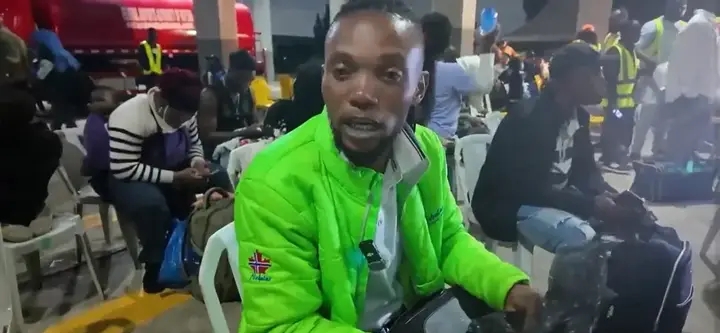
Lucky Otoikhila, a 49-year-old indigene of Edo State, Nigeria, spent 11 tumultuous years in South Africa chasing greener pastures, only to return home with nothing but his life after enduring repeated xenophobic violence that shattered his businesses, threatened his family, and forced him to leave his South African wife and two children behind.
Born and raised as a Muslim in Nigeria, Otoikhila is no stranger to hardship. As the eldest of six siblings, with a late father and an elderly mother still alive, he left Nigeria over a decade ago in search of better opportunities to support his family and invest in his 16.5-acre oil palm farm in Afuze, Owan East Local Government Area. “I left for greener pastures,” he recounted, “to earn something to take care of my farm.”
Life in South Africa, however, proved far from the dream he envisioned. Instead of stability, he faced constant danger, robbery, and targeted hatred simply for being Nigerian. “It was rough and bloody,” Otoikhila said. “I faced xenophobic attacks, not once, not twice.”
One of the most terrifying incidents occurred around 2017. Armed South Africans confronted him, accusing Nigerians of taking their women and resenting their entrepreneurial success. “They said their anger stemmed from the fact that we Nigerians were always with their women,” he explained. During the assault, his passport was thrown into the bush, though he later recovered it. In the climax of the terror, one attacker pointed a revolver directly at him.
“I cried like a baby,” Otoikhila recalled emotionally. “I knelt down and begged like a baby because I was at the point of being killed.”
He survived multiple such attacks, including incidents that destroyed his businesses. Otoikhila hustled legitimately by buying and selling phones, laptops, and accessories — never involved in drugs, he emphasized. Yet, profits were modest, and his South African wife often covered rent and family expenses through her work. His documents expired amid the fear of venturing out to renew them.
The escalating violence, including recent lootings and attacks on Nigerian-owned shops and properties, became unbearable. With his South African wife and their two children (born there) remaining behind, along with three children in Nigeria, Otoikhila made the painful decision to flee without his family abroad. “I have families in both countries,” he noted, but safety came first.
When President Bola Tinubu’s administration announced repatriation efforts for Nigerians facing threats, Otoikhila volunteered eagerly. He was among the early returnees, screened and airlifted in the second batch. “I was happy the day I decided to return to Nigeria,” he said. “I was not sad.”
Back home, Otoikhila feels a profound sense of freedom. No more fear of arbitrary stops by police demanding IDs or permits. “Nigeria is a free country,” he declared. “I love Nigeria because we don’t discriminate against anybody.” He praises the relative peace compared to the hostility he endured and vows never to return to South Africa, even for his wife and children there. “Even if they say I should come for free, I will not go.”
Instead, he plans to focus on legitimate businesses, starting with revitalizing his oil palm farm. He appeals to the Nigerian government for support and empowerment for returnees like himself, who want to contribute productively rather than resort to dubious means. “Most of us who came back did not return to relax; we came home to do one or two legitimate businesses.”
Otoikhila acknowledges positives in South Africa — reliable electricity, water, good roads — but the xenophobia overshadowed everything. He rejects blanket stereotypes, noting that not all South Africans or Nigerians are problematic, but political agitation and economic frustrations fuel the violence. “South Africa is a nice country, but just like my country, there are bad eggs.”
His story is one of resilience amid heartbreak, a call for Nigerians to value home, and a plea for government aid to help returnees rebuild. As violence continues to displace others, Otoikhila’s experience underscores the human cost of xenophobia and the enduring pull of one’s roots.
Welcome to KjtsonBlog, your trusted source for Nigerian celebrity news, Naija entertainment updates, and trending news in Nigeria. Stay connected to the latest gist, events, and stories across Naija and worldwide.