Nigeria’s flagship electricity project lies in ruins as billions in public funds go up in smoke
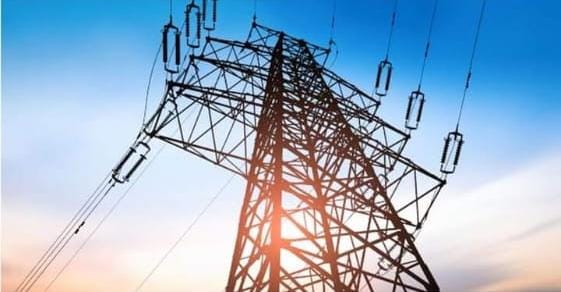
Despite the injection of €2.3 billion — equivalent to approximately N3.7 trillion at the current exchange rate — into the Presidential Power Initiative (PPI), Nigeria’s flagship electricity project has completely collapsed, leaving the country with virtually nothing to show for one of the most expensive power sector interventions in its history.
The PPI, conceived as a transformative solution to Nigeria’s chronic electricity crisis, was launched with considerable fanfare and positioned as the administration’s boldest infrastructure gambit. Anchored on a government-to-government agreement with Germany and anchored by Siemens AG as the lead technical partner, the initiative promised to unlock up to 25,000 megawatts of electricity and end decades of power sector underperformance. That promise now lies in ruins.
Investigation reveals that the project, which was structured in three phases, has stalled across all critical fronts. Rehabilitation of transmission infrastructure, procurement of equipment, and the deployment of technical personnel have all ground to a halt, with contractors and agencies trading blame over a tangled web of bureaucratic bottlenecks, funding gaps, and alleged mismanagement of disbursed funds.
Sources within the power sector told our correspondent that a significant portion of the funds disbursed under the initiative cannot be accounted for through verifiable on-ground progress. Substations that were to be upgraded remain in their dilapidated state, and the national grid continues to suffer from the same systemic failures the PPI was designed to cure.
“We were told this was different. That it had the personal backing of the President, that Siemens was involved, that the Germans would hold everyone accountable,” a senior official at the Transmission Company of Nigeria (TCN) said, requesting anonymity. “What we have today is what we always have — darkness and excuses.”
The collapse of the PPI is a damning indictment of Nigeria’s public investment architecture. Independent energy analysts say the failure is less about the concept and more about execution, noting that procurement irregularities, foreign exchange volatility, and the absence of a credible implementation monitoring framework effectively doomed the project from its early stages.
The Nigerian Electricity Regulatory Commission (NERC) and the Ministry of Power have yet to issue any formal statement acknowledging the project’s collapse, even as electricity generation nationwide continues to fluctuate between 3,500 and 4,500 megawatts — a figure far short of the country’s estimated demand of over 30,000 megawatts.
Civil society groups and opposition lawmakers are now calling for a full forensic audit of all funds disbursed under the PPI, as well as the prosecution of any individuals found to have diverted public resources. The National Assembly is also under pressure to invite the Minister of Power and relevant agencies for a public hearing.
For ordinary Nigerians — who have endured decades of epileptic power supply and continue to spend trillions annually on generators and diesel — the news of the PPI’s failure is yet another blow to a people long accustomed to broken promises.
As one Lagos-based small business owner put it: “They took trillions and gave us the same darkness. At what point do we stop calling this a failure and start calling it what it really is?”