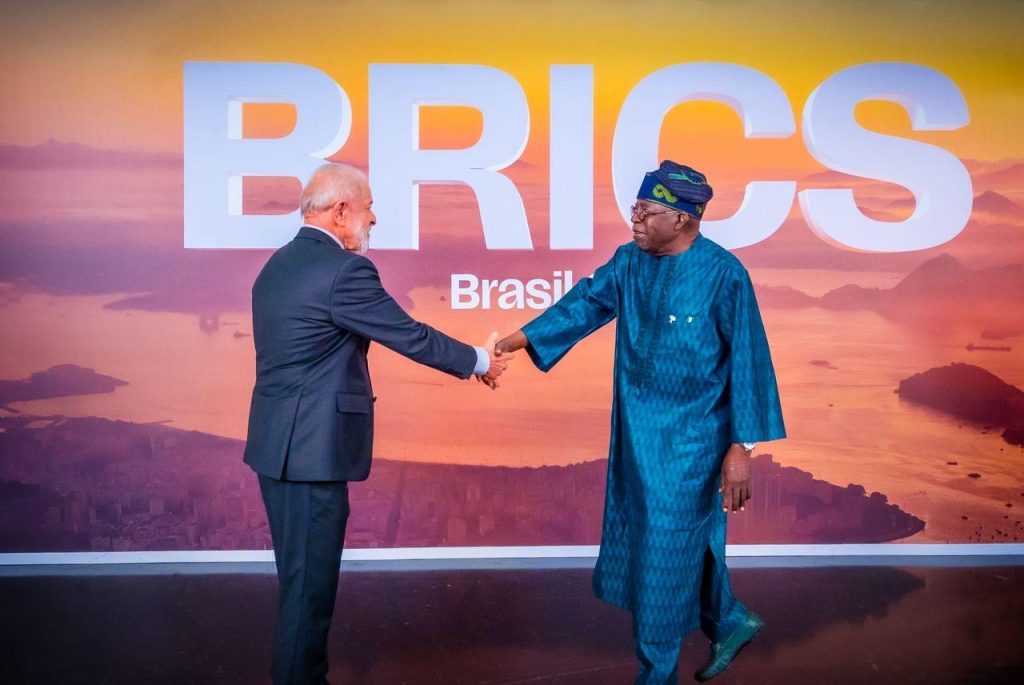
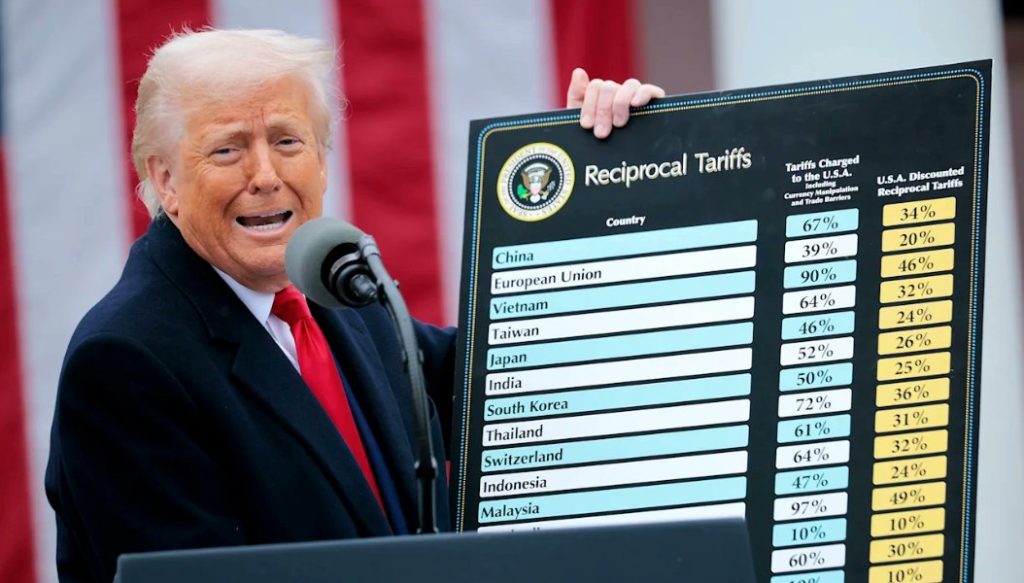
Washington D.C. – In a significant policy shift, President Donald Trump announced today that Nigeria will be among several nations subjected to an additional 10% tariff on its exports to the United States.
The move, articulated by President Trump in a press briefing, targets countries he accuses of aligning with the “anti-American policies of BRICS,” an intergovernmental organization comprising Brazil, Russia, India, China, and South Africa.
The declaration marks a notable escalation in global trade tensions and signals a more assertive stance from the U.S. against nations perceived as undermining American economic and political interests. While the full list of affected countries has not yet been released, President Trump explicitly named Nigeria, suggesting the West African nation’s growing engagement with the BRICS bloc has drawn the ire of the current U.S. administration.
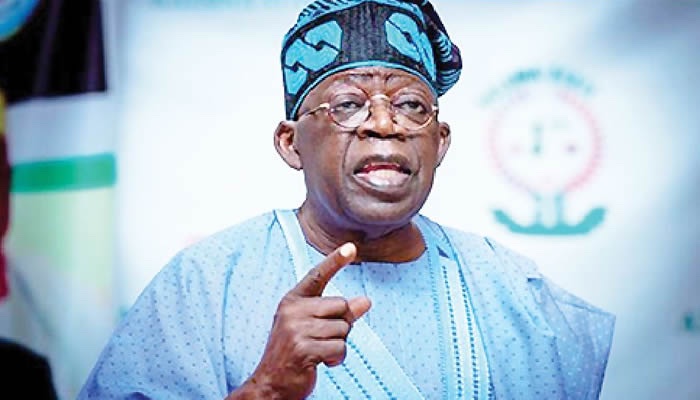
This new tariff imposition is expected to have substantial implications for Nigeria’s economy, which relies heavily on trade, particularly with major global partners. Nigerian exports to the U.S. include crude oil, agricultural products, and various manufactured goods. An additional 10% levy could significantly impact the competitiveness of these products in the American market, potentially leading to reduced demand, lower revenues for Nigerian businesses, and a strain on the nation’s foreign exchange earnings.
The announcement has already sparked reactions from economic analysts and international relations experts. Many are speculating on the specific “anti-American policies” cited by President Trump and how Nigeria’s involvement with BRICS is being interpreted by Washington. BRICS has often been seen as a counterweight to Western-dominated international institutions, advocating for a more multipolar world order and fostering economic cooperation among its members. Nigeria has increasingly sought to strengthen its ties with diverse global powers, including those within BRICS, as part of its foreign policy strategy to expand economic opportunities and diversify its partnerships.
The Nigerian government has yet to issue an official response to President Trump’s announcement. However, the news is likely to trigger urgent consultations within Abuja as policymakers assess the potential economic fallout and strategize on how to navigate this new challenge in its bilateral relations with the United States.
This development underscores the complex and evolving dynamics of global trade and diplomacy in the current geopolitical landscape.